Private Berlin Christmas Market & History Walking Tour
Runs in German English Dutch Turkish
- Easy
- Public transport nearby
This is a private tour. When you book a date, your group has the tour to itself. Nobody else can join.
Your guide
Berlin Excursions is a Berlin tour company with licensed guides working to the DIN EN 15565 standard. Our guiding experience goes back to 1993, …
Private evening walk through Berlin's Christmas markets with history stories, 10 Dec to 3 Jan, for up to 2 or 6 guests.
Highlights
- Private evening walk through Berlin's Christmas markets
- History stories from Brandenburg Gate to the Nikolaiviertel
- For up to 2 or up to 6 guests
- 10 December to 3 January, start at 7 pm
- Tours in English, German, Dutch and Turkish
What's included
- Guide Takes Nice Pictures
- Information about the sights
- English, Dutch, German, Turkish,
Not included
- Tips
What to bring
- An umbrella if rain is forecast, and warm clothes for the evening
Know before you go
- Infants must not sit on laps
- Infant seats unavailable
- Not suitable for pets
- Not stroller accessible
- Not wheelchair accessible
- Your guide meets you in front of the main entrance of your hotel or of the location you choose (within 1 km of Berliner Dom).
Meeting point: Madame Tussauds Berlin, Unter den Linden 74, 10117 Berlin, Germany
Meet in front of the main entrance.
Open in mapsCancellation policy: Free until 24 hours before: Full refund if you cancel at least 24 hours before the start. After that, no refund.
Cancel within that window and you get your full deposit back. After it, you do not get your deposit back. If the guide cancels, you always get your deposit back.
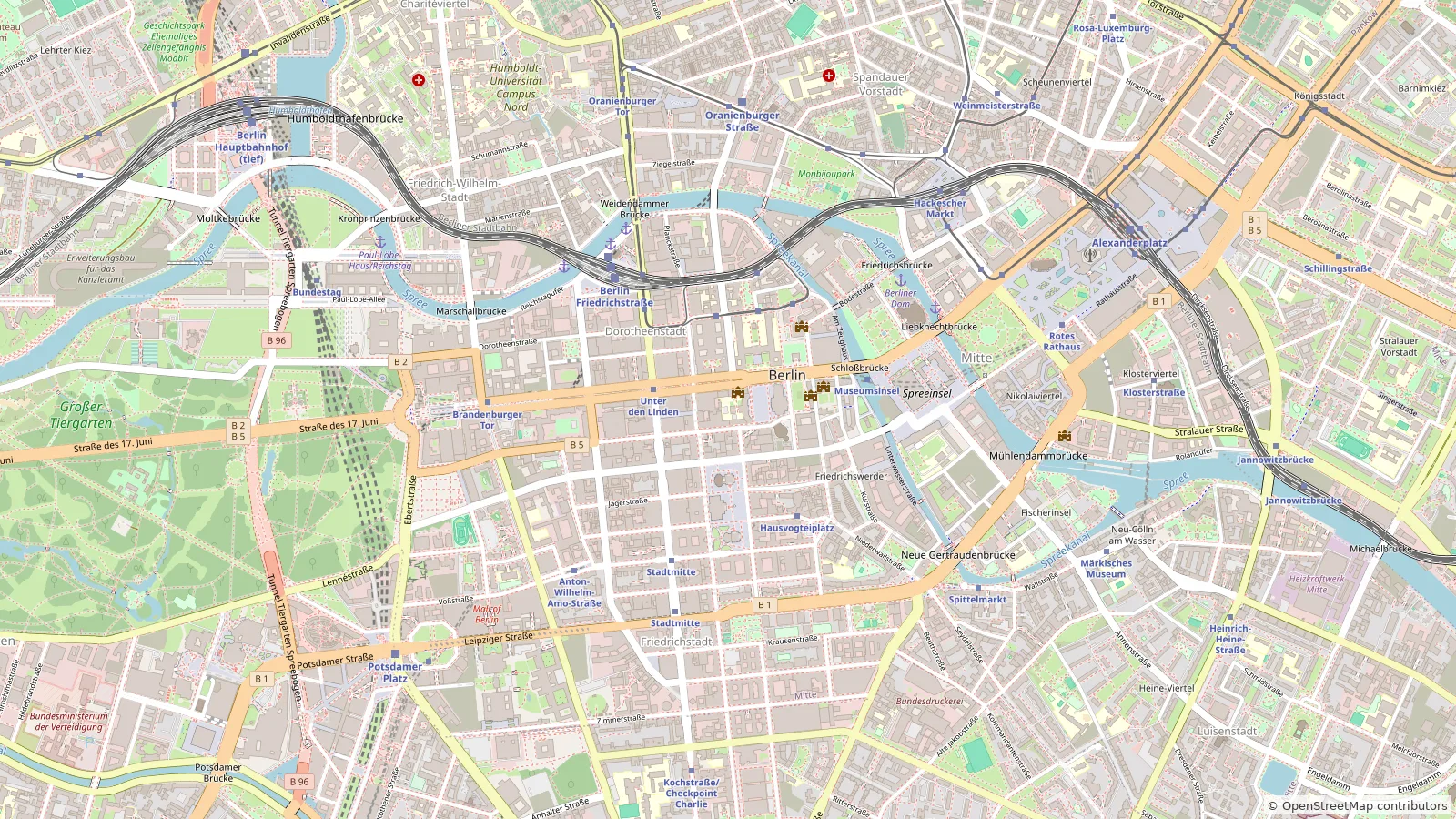
What you'll do
-
1
Brandenburg Gate (start)
See details See less
The Brandenburg Gate is a significant landmark in the heart of Berlin, at the western end of Unter den Linden Boulevard. It is a prominent entrance to the historic Pariser Platz and the eastern side of Berlin's Tiergarten Park. Designed by architect Carl Gotthard Langhans, this neoclassical triumphal arch is heavily influenced by ancient Greek architecture and features six Doric columns that support a grand pediment. Constructed from sandstone, the gate is adorned with various sculptures and reliefs. With a rich history, the Brandenburg Gate has been central to numerous important events. Built between 1788 and 1791, it symbolizes peace and victory following Prussia's successful military campaigns against France. Notably, during the Napoleonic Wars, the French emperor Napoleon marched through the gate after occupying Berlin in 1806.
-
2
Unter den Linden
See details See less
Unter den Linden, which translates to "Under the Linden Trees," is a tree-lined avenue that runs through the heart of Berlin. It extends approximately 1.5 kilometres (about 0.9 miles) from the Brandenburg Gate (Brandenburger Tor) in the west to the Lustgarten and Berlin Cathedral (Berliner Dom) in the east. History: The history of Unter den Linden dates back to the 17th century when it was originally a bridle path lined with linden trees. Over the centuries, it became one of Berlin's most prestigious and culturally significant boulevards, lined with elegant buildings, palaces, and institutions. 3. Landmarks: Unter den Linden is known for its impressive architectural landmarks and cultural institutions. Some notable attractions along the boulevard include the Brandenburg Gate, A neoclassical triumphal arch and one of Germany's most iconic symbols. Berlin State Opera A renowned opera house with a rich cultural heritage. Bebelplatz: The site of the infamous Nazi book burning in 1933.
-
3
Bebelplatz – Book Burning Memorial
See details See less
Historical Significance: Bebelplatz is most famous for an event that took place here on May 10, 1933, during the early years of Nazi rule in Germany. The Nazis organized the infamous book burning on Bebelplatz, where they set fire to thousands of books, including those written by Jewish, communist, and other authors considered "un-German" by the regime. This event symbolized the suppression of intellectual freedom and cultural expression. Bebelplatz is a historic public square in the heart of Berlin, Germany. It is known for its cultural significance and historical events. Bebelplatz is in the Mitte district of Berlin, near the famous Unter den Linden Boulevard and several notable landmarks, including Humboldt University and the State Opera House.
-
4
Gendarmenmarkt – Christmas Market
See details See less
Gendarmenmarkt is often called Berlin's most beautiful square. The Concert Hall by Karl Friedrich Schinkel stands between the twin French and German Cathedrals, built around 1700 when Huguenot refugees helped shape the city. In the Christmas season the square hosts one of Berlin's best-known Christmas markets, with craft stalls, festive lights and seasonal treats.
-
5
Neue Wache
See details See less
Neue Wache: Location: Neue Wache is in the heart of Berlin, at the eastern end of Unter den Linden Boulevard. It is located near the Brandenburg Gate and various other essential landmarks in the city. Architectural Style: The Neue Wache is a neoclassical building constructed between 1816 and 1818. Its design, created by the Prussian architect Karl Friedrich Schinkel, features a simple, elegant façade with Doric columns and a pediment. The Neue Wache is a poignant and thought-provoking memorial in the heart of Berlin, dedicated to those who have suffered war and dictatorship. It is a place of reflection and remembrance, inviting visitors to contemplate the human cost of conflict and the importance of peace and reconciliation.
-
6
City Palace (Humboldt Forum) – Christmas Market
See details See less
Christmas market stop: stroll through the festive stalls around the rebuilt City Palace, with the illuminated Berlin Cathedral right next to it. The Humboldt Forum: A Palace for the Past and Future In the heart of Berlin, the Humboldt Forum is a modern reimagining of the historic Berlin Palace. It’s a place where history and culture come alive, offering visitors an experience that bridges centuries. A Palace with Deep Roots The original Berlin Palace was a symbol of power and grandeur for centuries, serving as the residence of Prussian kings and German emperors. After being heavily damaged in World War II and later demolished, the site saw many changes before transforming into the Humboldt Forum. Rebuilt with historical accuracy and contemporary design, it reflects Berlin’s complex journey through time. More Than a Museum The Humboldt Forum is not just a building—it’s a space for exploration. Inside, you’ll find exhibitions that explore topics like global cultures, colonial history, and modern art. These displays aren’t just about the past; they encourage visitors to think about how history shapes the world we live in today. A Blend of Old and New The building itself is a masterpiece of contrasts. The Baroque facades, including the iconic dome, bring back the grandeur of the old palace, while the sleek, modern interiors are perfect for contemporary exhibitions and events. Why Visit? Whether you’re interested in history, fascinated by global cultures, or just looking for a stunning view of Berlin from the rooftop terrace, the Humboldt Forum offers something for everyone. It’s a place to learn, reflect, and connect with the stories that shape our world. The Humboldt Forum is more than a nod to Berlin’s past—it’s a space that invites you to consider how the past and present can inspire the future.
-
7
The Berlin Cathedral (Berliner Dom)
See details See less
The Berlin Cathedral (Berliner Dom) is situated on Museum Island (Museumsinsel) in the heart of Berlin. Museum Island is a UNESCO World Heritage Site located in the Spree River in the Mitte district of Berlin. The Berlin Cathedral is a stunning example of neo-Renaissance architecture. It was built in the late 19th century and completed in 1905. The cathedral features a massive dome, one of Europe's largest. Its interior is equally impressive, with ornate decorations, mosaics, and a beautiful altar.
-
8
Neptune Fountain & Alexanderplatz – Christmas Markets
See details See less
Between the Red Town Hall and St. Mary's Church, the Neptune Fountain (1891) becomes the centre of a large Christmas market with a Ferris wheel and an ice rink. A few steps further, Alexanderplatz hosts another Christmas market right below the TV Tower, the tallest structure in Germany.
-
9
Nikolai Quarter – Christmas Market (end)
See details See less
The tour ends at the cosy Christmas market in the Nikolai Quarter, around St. Nicholas' Church. Nikolai Quarter: The Heart of Old Berlin The Nikolai Quarter (Nikolaiviertel) is the oldest part of Berlin, nestled near the Spree River. Its charming cobblestone streets, historic buildings, and cozy courtyards offer a glimpse into the city’s medieval roots. Centered around the 13th-century Nikolaikirche (St. Nicholas Church), the area was carefully reconstructed after World War II to restore its historic character. Today, it’s a popular spot for visitors, with quaint shops, traditional German restaurants, and a peaceful atmosphere that contrasts with Berlin's bustling modern vibe. A stroll through the Nikolai Quarter is like stepping back in time, making it a must-visit for history lovers and those seeking a quieter side of Berlin.
Reviews
No reviews yet. Be the first to book and share your experience.